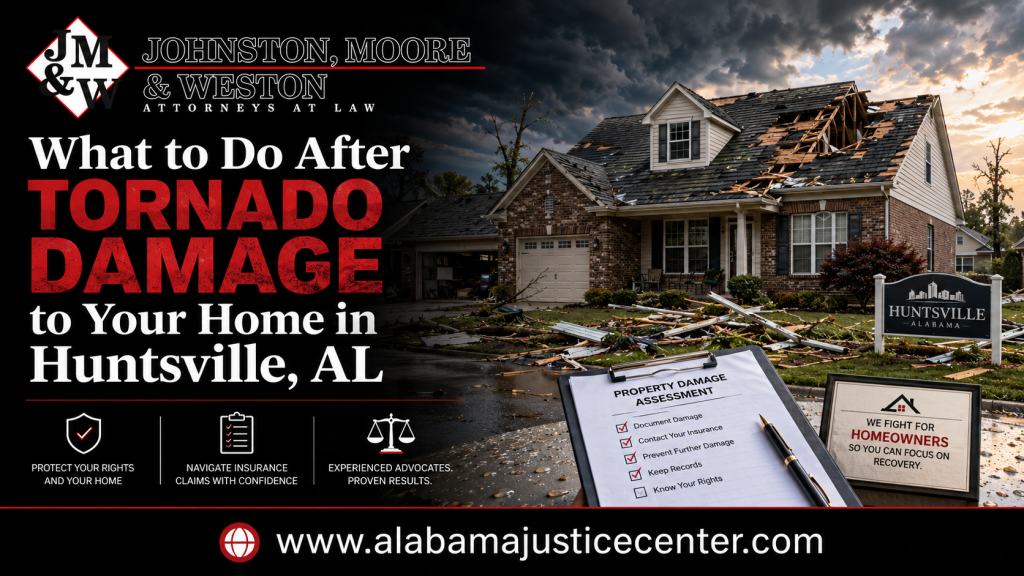
A tornado can damage your home in seconds, but the insurance claim process can stretch for weeks or months. After the winds pass, homeowners in Huntsville and across North Alabama are often left dealing with roof damage, broken windows, structural issues, water intrusion, fallen trees, destroyed belongings, and urgent repair decisions. In that moment, your homeowners insurance policy should help you move forward.
Unfortunately, many Alabama homeowners learn that filing a tornado damage insurance claim is not always simple. Insurance companies may question the cause of the damage, delay payment, undervalue repairs, or deny parts of the claim. That can leave families paying out of pocket for losses that should be covered.
If your home was damaged by a tornado in Huntsville, Madison, Decatur, Athens, Scottsboro, or anywhere in North Alabama, the steps you take right away can protect your property and strengthen your claim. If your insurer is already delaying, denying, or underpaying your claim, call Johnston Moore & Weston at 256-533-5770 or visit the Contact Us page to request a consultation.
You can also learn more about the firm’s insurance claim dispute services here.
First, Make Sure Your Family Is Safe
Before thinking about your home insurance claim, focus on safety. Tornado damage can create hidden dangers, including unstable walls, exposed wiring, gas leaks, broken glass, loose roofing materials, and standing water near electrical systems. Do not enter a damaged home if local officials, fire personnel, or emergency responders have warned that it is unsafe.
If you had to leave your home because it is not livable, keep track of where you stay, what you spend, and why the expense was necessary. Many homeowners policies include additional living expense coverage, sometimes called loss of use coverage, but insurance companies may still ask for documentation before paying those costs.
Keep receipts for:
- Hotel stays
- Temporary rentals
- Meals
- Emergency clothing
- Toiletries
- Pet boarding
- Transportation
- Storage
- Temporary repairs
These records may become important if your insurer disputes the amount of your tornado damage claim.
Document the Tornado Damage Before Cleaning Up
One of the biggest mistakes homeowners make after storm damage is cleaning up too quickly without taking enough photos and videos. It is understandable to want debris removed and repairs started right away, but your insurance company may later argue that there is not enough proof of the damage.
Before moving damaged items, take clear photos and videos of everything you can safely document.
Focus on:
- Roof damage
- Missing shingles
- Torn siding
- Broken windows
- Ceiling stains
- Water intrusion
- Fallen trees or branches
- Damaged fences
- Garage doors
- HVAC units
- Detached structures
- Personal belongings
- Interior cracks or shifting
- Foundation concerns
- Mold or moisture after water entered the home
Take wide shots that show the full room or exterior area, then take close-up images that show the damage in detail. If possible, use timestamps or save the original file data on your phone. You should also make a written list of damaged items and include approximate values, purchase dates, and receipts when available.
If you are unsure whether your insurance company is properly considering all storm-related damage, call Johnston Moore & Weston at 256-533-5770. You can also reach the firm through our contact page for help reviewing your insurance claim situation.
Review Your Homeowners Insurance Policy
After tornado damage, you need to know what your policy actually says. Do not rely only on a short summary page or what an adjuster tells you over the phone. Your full homeowners insurance policy controls what may be covered, what may be excluded, and what deadlines you must meet.
Look for sections that address:
- Dwelling coverage
- Other structures coverage
- Personal property coverage
- Windstorm damage
- Hail damage
- Water damage
- Debris removal
- Tree removal
- Additional living expenses
- Replacement cost value
- Actual cash value
- Deductibles
- Duties after loss
- Proof of loss requirements
- Appraisal provisions
- Lawsuit deadlines
Tornado damage is often tied to windstorm coverage, but every policy is different. Some claims become complicated when wind and water damage overlap. For example, if high winds tear open part of the roof and rain enters the home, the insurer may try to limit what it pays by arguing over the cause, timing, or scope of damage.
A policy review is especially important if your claim involves roof damage, structural damage, interior water damage, or a large loss. If you need legal help understanding what your homeowners insurance policy may cover, visit Johnston Moore & Weston’s insurance claims page or call 256-533-5770.
Notify Your Insurance Company Promptly
Most homeowners insurance policies require policyholders to report damage within a reasonable time. Do not wait weeks to notify your insurer. Call your insurance company or agent as soon as you can safely do so.
When reporting the claim:
- Give the date and approximate time of the tornado or storm
- Explain the visible damage
- Ask for a claim number
- Ask what documents are needed
- Ask when an adjuster will inspect the property
- Ask how emergency repairs should be handled
- Write down the name of everyone you speak with
- Save all emails, texts, letters, and claim portal messages
Keep your statements factual. Do not guess about the cause of damage, the full repair cost, or whether something was pre-existing. If you are not sure, say you are still assessing the damage.
Make Temporary Repairs to Prevent More Damage
Homeowners are usually expected to take reasonable steps to prevent additional damage after a covered loss. That may include placing a tarp over a damaged roof, boarding broken windows, drying wet areas, or moving belongings away from water.
However, do not make permanent repairs until the insurance company has had a fair chance to inspect the damage, unless waiting would create a safety issue or cause further loss. Before any temporary repair, document the condition with photos and videos.
Keep:
- Contractor invoices
- Tarp receipts
- Material receipts
- Emergency repair bills
- Cleanup costs
- Water mitigation invoices
- Communications with contractors
If your insurer refuses to reimburse reasonable emergency repair costs or claims you failed to prevent additional damage, that may become part of a larger storm damage insurance dispute.
Be Careful When Speaking With the Insurance Adjuster
The insurance adjuster may seem helpful, but remember that the adjuster works for the insurance company. Their job is to evaluate the claim for the insurer. That does not always mean they will fully account for every repair needed to restore your home.
When the adjuster visits:
- Walk through the damage with them
- Point out all visible concerns
- Provide your photos and repair estimates
- Ask whether they inspected the roof, attic, crawl space, and interior
- Do not sign documents you do not understand
- Do not accept a final settlement until you know the full scope of loss
- Do not agree that damage is minor if you are unsure
If the adjuster’s estimate seems too low, get your own contractor estimate. A common problem after tornado damage is that the insurance estimate does not reflect real repair costs, code requirements, material availability, labor pricing, or hidden damage discovered after work begins.
If you believe the insurer is minimizing the damage to your home, contact Johnston Moore & Weston or call 256-533-5770. The sooner you get guidance, the easier it may be to protect your claim.
Watch for Signs of an Underpaid Tornado Damage Claim
Not every insurance dispute starts with a denial. Sometimes the insurance company approves the claim but offers far less than the actual cost of repair. This can be just as stressful as a denial because the homeowner is left with a payment that does not fix the home.
Signs your tornado damage insurance claim may be underpaid include:
- The insurer’s roof estimate is much lower than your contractor’s estimate
- The adjuster ignores interior water damage
- The claim payment does not cover code upgrades
- The insurer refuses to pay for matching materials
- The insurer pays for spot repairs when replacement may be necessary
- Personal property losses are valued too low
- Additional living expenses are denied or cut short
- The insurer blames part of the damage on age, wear and tear, or poor maintenance
- The company closes the claim before all damage is known
An underpaid home insurance claim can force you to choose between incomplete repairs and paying thousands of dollars out of pocket. Before accepting a low settlement, speak with an insurance claim dispute attorney who can review your policy, repair estimates, and claim file.
For help with a denied, delayed, or underpaid homeowners insurance claim in Huntsville, call Johnston Moore & Weston at 256-533-5770.
What If Your Tornado Damage Claim Is Denied?
A denied insurance claim does not always mean the insurance company is right. Insurers deny tornado damage claims for many reasons, including policy exclusions, alleged pre-existing damage, missed deadlines, incomplete documentation, or disputes over whether the tornado caused the loss.
Common denial reasons include:
- “The damage was caused by wear and tear”
- “The roof was already old”
- “The damage was cosmetic”
- “The policy does not cover this type of water damage”
- “The claim was not reported on time”
- “The repair costs are not reasonable”
- “The damage was not caused by the storm”
- “The policyholder failed to prevent further damage”
Do not assume the denial is final. Ask for the denial in writing and save every document. The denial letter should explain the insurer’s reason and may cite policy language. That language needs to be reviewed carefully.
If your Alabama tornado damage insurance claim was denied, Johnston Moore & Weston can review the insurer’s reasoning and help you understand your next steps. Call 256-533-5770 or request a consultation.
When a Delay Becomes a Serious Problem
Some homeowners never receive a clear denial. Instead, the insurance company keeps delaying the claim. The adjuster may stop responding. The company may ask for the same documents again and again. The file may get transferred to a different representative. Weeks may pass without payment.
Delays can create serious hardship when your home needs urgent repair. A delayed insurance claim may prevent you from hiring contractors, replacing damaged belongings, repairing the roof, or returning home safely.
Keep a timeline of every delay, including:
- Date the claim was filed
- Date the adjuster inspected the property
- Dates you sent documents
- Dates the insurer requested more information
- Dates you followed up
- Dates the insurer failed to respond
- Any missed payment dates
- Any changing explanations from the insurer
A long delay may be a warning sign that the insurance company is not handling your claim fairly. If your storm damage claim has stalled, contact Johnston Moore & Weston at 256-533-5770 or visit our contact page to discuss your options.
Can Tornado Insurance Claim Problems Involve Bad Faith?
In Alabama, insurance companies have a duty to deal fairly with policyholders. Bad faith insurance issues may arise when an insurer refuses to pay a valid claim without a lawful reason, fails to properly investigate, misrepresents policy terms, or uses delay tactics to pressure the homeowner into accepting less than the claim is worth.
Possible signs of bad faith insurance conduct include:
- Denying a claim without a proper investigation
- Ignoring clear evidence of tornado damage
- Misrepresenting what the policy covers
- Offering an extremely low settlement without support
- Refusing to explain a denial
- Delaying payment without a valid reason
- Changing the reason for denial
- Pressuring the homeowner to accept a quick low offer
- Failing to communicate in a reasonable way
Not every denied or underpaid claim is bad faith, but suspicious insurer conduct should be reviewed. If your insurer is acting unfairly after tornado damage to your home, Johnston Moore & Weston can evaluate whether your situation may support an insurance dispute or bad faith claim.
Learn more about the firm’s insurance claim representation or call 256-533-5770 today.
Gather Strong Evidence for Your Home Insurance Claim
The stronger your documentation, the harder it may be for the insurance company to dismiss your losses. After tornado damage, create a claim folder that includes every important document.
Include:
- A copy of your homeowners insurance policy
- The claim number
- Photos and videos of all damage
- Contractor estimates
- Roof inspection reports
- Engineering reports, if available
- Receipts for temporary repairs
- Receipts for temporary housing
- A damaged property inventory
- Emails from the insurance company
- Letters from the insurer
- Notes from phone calls
- Names of adjusters and representatives
- Copies of checks or payment summaries
- The denial letter, if one was issued
You should also document the condition of your home before the tornado if possible. Older photos, home inspection reports, maintenance records, renovation invoices, and roof repair records may help prove that the damage was caused by the storm rather than neglect or prior wear.
Be Cautious With Quick Settlement Offers
After widespread tornado damage, insurance companies may process many claims at once. Some homeowners receive quick payment offers that seem helpful at first. But a fast offer is not always a fair offer.
Before accepting a settlement, ask:
- Does the estimate cover all visible damage?
- Does it account for hidden damage?
- Does it include roof, siding, interior, and structural repairs?
- Does it include debris removal?
- Does it include personal property losses?
- Does it include additional living expenses?
- Does it reflect local repair costs in North Alabama?
- Does it account for code requirements?
- Will accepting the payment close the claim?
Do not sign a release or settlement agreement without understanding what rights you may be giving up. If the offer does not come close to the real cost of restoring your home, legal guidance can help you avoid a costly mistake.
For help reviewing a tornado damage insurance settlement offer, call Johnston Moore & Weston at 256-533-5770 or submit your information here.
Why Homeowners in Huntsville Should Act Quickly
Tornado damage claims can become harder to prove as time passes. Contractors may remove damaged materials. Water damage may spread. Memories fade. Insurance representatives may change. Deadlines may approach. Waiting too long can weaken your position.
Acting quickly can help you:
- Preserve evidence
- Document the original storm damage
- Meet policy deadlines
- Avoid missed proof of loss requirements
- Challenge low estimates before repairs begin
- Prevent the insurer from blaming delays on you
- Protect your right to pursue legal action if needed
If you are already frustrated by the insurance process, do not wait until the damage gets worse or the claim file becomes more complicated. A conversation with an attorney can help you understand whether the insurer is treating your claim properly.
How Johnston Moore & Weston Helps With Tornado Damage Insurance Claims
Johnston Moore & Weston represents policyholders in insurance claim disputes throughout Huntsville and North Alabama. The firm helps individuals and families dealing with denied claims, delayed payments, underpaid losses, coverage disputes, and bad faith insurance issues.
In a tornado damage home insurance claim, the firm may help by:
- Reviewing your homeowners insurance policy
- Evaluating the insurer’s estimate or denial
- Gathering supporting evidence
- Communicating with the insurance company
- Challenging unsupported exclusions
- Comparing contractor estimates with insurer estimates
- Identifying signs of bad faith conduct
- Negotiating for a fair resolution
- Filing a lawsuit if the insurer refuses to handle the claim properly
Insurance companies have adjusters, claim handlers, and legal teams protecting their financial interests. Homeowners deserve someone protecting theirs.
If your tornado damage claim is not being handled fairly, call Johnston Moore & Weston at 256-533-5770 or visit our contact page to request a consultation.
Areas Served in North Alabama
Johnston Moore & Weston is based in Huntsville and represents individuals throughout North Alabama. Homeowners dealing with tornado damage insurance claims may contact the firm from communities including Huntsville, Madison, Decatur, Athens, Scottsboro, Guntersville, Albertville, Cullman, Florence, Muscle Shoals, Hartselle, Fort Payne, and surrounding areas.
Tornadoes and severe storms can affect communities across Madison County, Limestone County, Morgan County, Jackson County, Marshall County, DeKalb County, Cullman County, Lauderdale County, Colbert County, Franklin County, Lawrence County, and nearby areas. If your home was damaged and your insurance company is not treating you fairly, legal help is available.
FAQs About Tornado Damage Home Insurance Claims in Alabama
Does homeowners insurance cover tornado damage in Alabama?
Many homeowners insurance policies provide coverage for windstorm damage, which may include tornado damage. Coverage depends on the specific policy, the cause of the damage, exclusions, deductibles, and the evidence supporting the claim. Homeowners should review the full policy and speak with an attorney if the insurer denies or limits coverage.
What should I do if my roof was damaged by a tornado?
Start by documenting the roof damage from the ground if it is safe. Do not climb on an unstable roof. Report the claim to your insurer, request an inspection, and get an independent contractor estimate if possible. If the insurance company says the damage is old, cosmetic, or not covered, call Johnston Moore & Weston at 256-533-5770 for help reviewing the claim.
Can my insurance company deny part of my tornado damage claim?
Yes. An insurer may approve one part of a claim and deny another. For example, it may pay for some exterior repairs but deny interior water damage, personal property damage, or additional living expenses. A partial denial should still be reviewed carefully because the insurer may be undervaluing the full scope of loss.
What if my insurance payment is too low to repair my home?
Do not assume the first estimate is correct. Get detailed contractor estimates and compare them to the insurer’s scope of work. If the payment does not cover necessary repairs, you may have an underpaid home insurance claim. Johnston Moore & Weston can review the estimate and help you determine whether to challenge the payment.
Should I hire a contractor before the insurance adjuster comes?
You may need emergency repairs to prevent further damage, but permanent repairs should usually wait until the damage is documented and inspected. Keep all receipts and take photos before any repair work. You can also obtain contractor estimates to support your claim.
What if the insurance company blames the damage on wear and tear?
This is common in storm damage disputes, especially with roof claims. If your home was in reasonable condition before the tornado and the damage appeared after the storm, gather photos, maintenance records, contractor opinions, and any prior inspection reports. An attorney can help challenge unsupported wear-and-tear arguments.
How long do I have to take action after a denied tornado insurance claim?
Deadlines can come from your insurance policy and Alabama law. Because waiting can limit your options, speak with an attorney as soon as you receive a denial, low offer, or unexplained delay. Contact Johnston Moore & Weston or call 256-533-5770 to discuss your situation.
Talk to a Huntsville Home Insurance Claim Attorney Today
Tornado damage can turn your life upside down. You should not have to fight your insurance company while trying to repair your home, replace your belongings, and keep your family safe. If your homeowners insurance claim has been denied, delayed, undervalued, or handled unfairly, Johnston Moore & Weston is ready to help you understand your rights.
Call 256-533-5770 today to schedule a consultation with Johnston Moore & Weston in Huntsville, AL. You can also reach the firm online through the Contact Us page.
Your insurance company has people protecting its bottom line. Make sure you have someone protecting your home, your claim, and your financial recovery.

Archives

256-533-5770
120 Holmes Avenue Northeast, Suite 200
Huntsville, AL 35801-4830
Connect With Us!
Johnston Moore & Weston represents individuals throughout North Alabama in communities such as Huntsville, Madison, Decatur, Birmingham, Cullman, Gadsden, Anniston, Scottsboro, Athens, Fort Payne, Albertville, Boaz, Guntersville, Stevenson, Rainsville, Arab, Hartselle, Russellville, Muscle Shoals, Florence, Sheffield, Bridgeport, and Moulton, as well as Madison County, Jackson County, Limestone County, Dekalb County, Marshall County, Morgan County, Cullman, Etowah, Lauderdale, Colbert, Franklin and Lawrence County.
No representation is made that the quality of legal services to be performed is greater than the quality of legal services performed by other lawyers.